The Role That the Principles of Design Play in Relationship to the Elements of Art
9 minutes read
You're probably wondering what makes good design and how yous tin create visual materials that stand out.
While no i tin reply this question in just 1 paragraph, you lot should know that at that place are a few elements and principles of design that tin can make your work much more manageable. Then, what are the elements of pattern?
The elements of blueprint are the parts that define the visual, the tools and components that a person uses to create a composition. In other words, they correspond the base of graphic blueprint.
The principles of blueprint , on the other hand, are all about how a person uses the elements to create a visual and convey a message.
These elements and principles of pattern stand for a gear up of guidelines that accept the purpose of helping y'all create aesthetically pleasing visuals.
The well-nigh meaning divergence betwixt design principles and elements is that the latter can exist labeled as rules, while elements are the components that are going to help you follow those rules for the best pattern outcome.
And even though rules can be broken, they have been created for a reason.
Design is all most carefully combining pattern elements and using the right principles to create a visual representation of an idea.
In today's article, I volition walk you lot through some of the most essential blueprint elements and principles of blueprint that will hopefully provide the inspiration you lot need for your side by side projects.
Elements Of Design
one. Line
Lines are the about basic chemical element of design, and they make up pretty much everything. They can also be defined as linear marks that can describe a shape or outline something.
You'll oftentimes come across that lines are as well used to create perspective or evoke a certain feeling. They can exist thick or thin, vertical, horizontal, or diagonal, or they can create texture. A straight line tin can send the feel of order and neatness, while a wavy line tin create movement.
A technique that's frequently used with lines is directing the center towards a detail area of a pattern. You tin can play effectually with this type of element and encounter how you tin implement it in your visual materials.
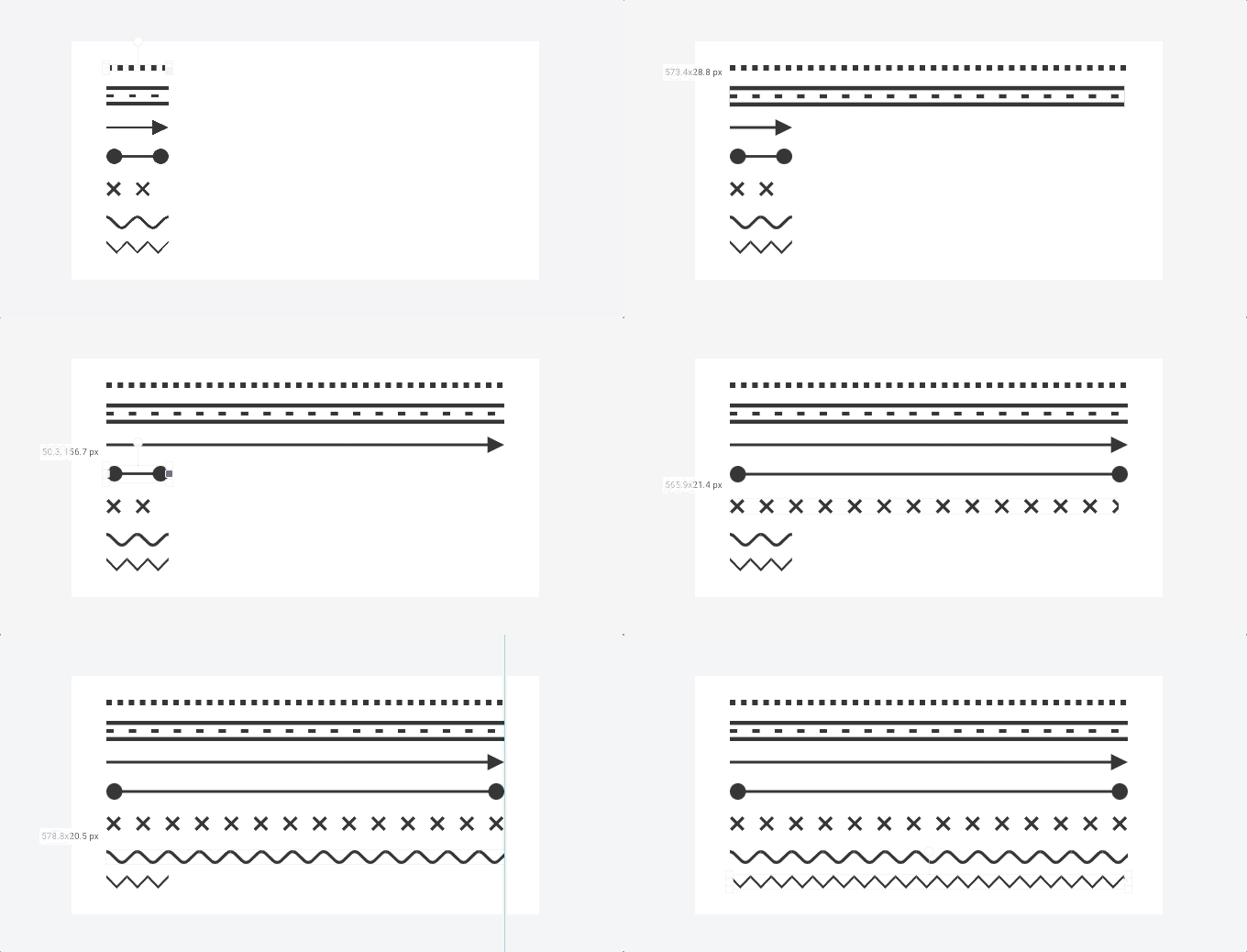
The great thing about using a design tool such as Creatopy is the fact that you don't need to create lines from scratch. In the Elements section, yous can now discover 80 new, end-to-finish scalable, flexible lines and arrows.
These elements will help you create more diverse content, such every bit infographics, listen maps, flows, or routings. You can also use them as connectors or separators.
The design possibilities are endless thanks to these elements.
2. Color
Color is i of the most important elements of design considering they tin evoke certain emotions. It's well-known that the color red is usually associated with love, passion, or anger.
In that location are also cultural differences that yous need to take into account when using colors in design. For example, a colour that'due south happy in a detail state tin can send negative emotions in another i.
As well, something equally simple as changing the hue or the saturation tin can send a different type of feeling. The primal here is to know a little bit of color theory.
Color has 3 different backdrop:
- Hue, which is the colour name;
- Saturation refers to how intense the hue is;
- Value refers to the lightness and darkness of the hue.
Yous tin utilise color as a background, or to support other elements in your blueprint. Combining colors between them is the key to creating a visual that matches your brand.

3. Shape
I talked to a higher place how lines can create shapes, among other things. By reversing this, we tin can ascertain shapes equally something enclosed past lines, which are its boundaries.
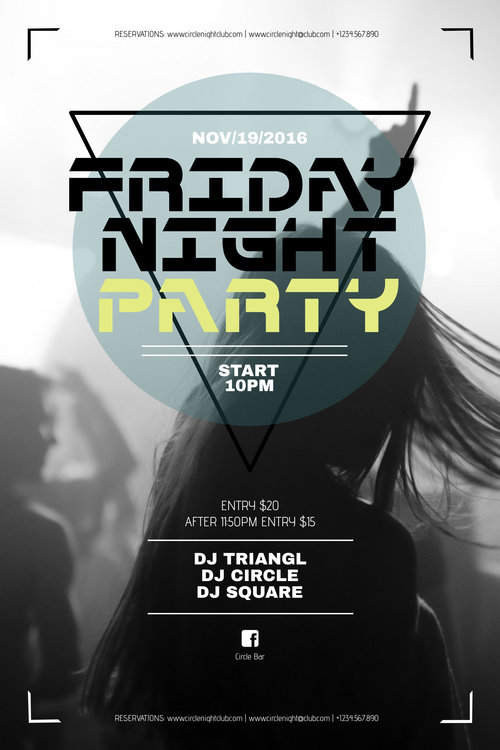
Shapes can exist geometric (rectangle), realistic (animals), or abstruse (icons), and they accept two dimensions: height and width.
If you lot desire to suggest feminity, then you can employ curvy shapes such as circles. If, on the other mitt, y'all want to induce a more masculine feeling, so use athwart shapes.
The Elements section in our banner maker has a Shapes category also, where you lot can find annihilation from arrows to stars, ribbons, labels, badges, frames, voice communication bubbles, or blobs.
Paradigm credits
4. Infinite
Y'all'll often hear people refer to space equally white space or negative space, which can be defined equally the space between or around objects.
If you want to be creative with your designs, you tin can leverage negative space by manipulating information technology and forming an object, a shape, or an animal. When y'all use it strategically, you can genuinely create stunning designs that draw people's attention.

five. Symmetry
Symmetry is one of those things that us, humans, detect extremely pleasing. According to science , this happens because we love familiarity and when we see something that has symmetry in it, it's easy for us to recognize it. It'south also i of the shortcuts we use to make sense of the world effectually us.
There are plenty of brands, such as Starbucks, Target, or Chanel, that utilize symmetry in their logos, and not but in their designs.
Nonetheless, note that in that location's a fine line between symmetry and making it seem similar the other side of the design was copied and pasted from the other ane. Information technology'south recommended non to strive for perfect symmetry but to add elements that suggest this idea.

Image credits
6. Calibration
Scale refers to the size of an element in relation to some other ane, and it tin assistance bring residuum, proportion, and bureaucracy in whatsoever pattern.
Usually, scale is used in design to represent the authentic size of an object or to emphasize the departure in size between two objects. However, if y'all want to create something that yous will make an bear upon on your audition, then it'south best if you forget virtually scaling objects co-ordinate to reality.
For example, you can make an elephant dramatically smaller than a true cat and make the cat the size of a dinosaur.
If you want to draw attention to a particular object, and so this is the way to become.
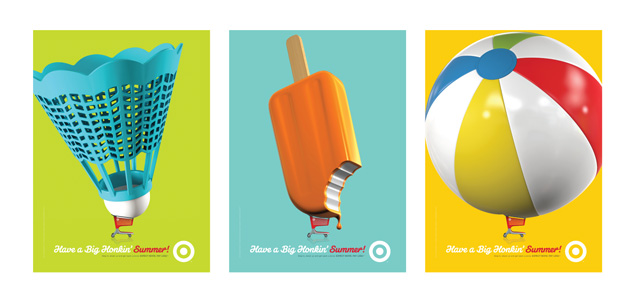
Image credits
vii. Texture
Texture refers to the surface quality of a design, which tin be smooth, rough, glossy, etc. It can be physical or visual. For the purpose of this article, we'll talk about visual texture.
Clean designs are nice and all only adding a piddling bit of texture tin can go far pop even more. Y'all can utilize it to accentuate a specific part of your visual, then y'all draw people's attention to the dominant part.
The use of a font or a groundwork image that mimics a particular texture is going to help yous create a memorable design.
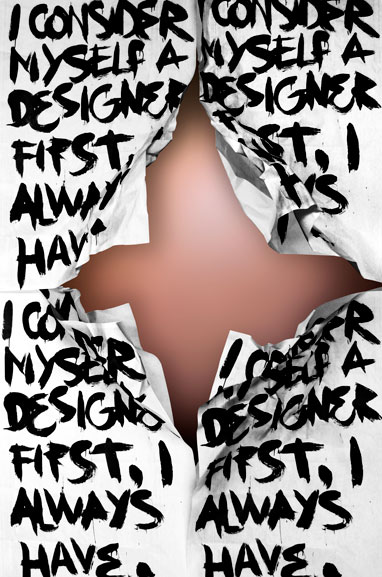
Image credits
8. Direction
Direction not only gives the illusion that at that place'south movement in your design, but it also lets people know where to look and how to movement their eyes beyond the visual.
By and large, the man eye starts with the top left of a page and then gravitates towards the lesser right corner and then you can take advantage of this pattern whenever you're designing.
Related articles:
Geometric Shapes in Pattern: How to Apply Them Creatively
How to Apply Geometric Patterns To Create Brilliant Designs
30 Amazing Graphic Design Tips Professional person Designers Desire Y'all to Know
Principles of Blueprint
one. Balance
You know how sometimes y'all look at a design, whether it'due south a poster or a banner advertizement, and everything feels correct almost information technology? That means the limerick is counterbalanced.
Balance is all about how your elements weigh in the visual, and it tin be achieved through symmetry, asymmetry, or radial symmetry.
Shapes, colors, objects, textures, or values can create balance in a design. This is an essential principle because imbalance can cause discomfort for the viewer.

Paradigm credits
2. Contrast
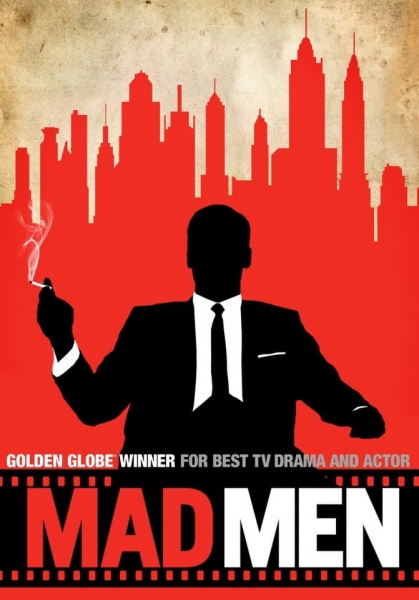
When you desire to emphasize primal elements in your design and get in pop, and then using this principle is 1 of the best things you can do. Dissimilarity helps you grab people's attending and generate involvement in your visual by making an object more than distinguishable than the other objects present in the design.
A practiced example of dissimilarity is negative space or the use of complementary colors, which is going to redirect someone'southward attention to a particular portion of the visual. Other common forms of dissimilarity are dark vs. lite, large vs. modest, or thick vs. thin.
Another significant advantage of using contrast is the fact that information technology improves the blueprint'south readability and legibility.
Epitome credits
three. Repetition
Repetition is boring and monotonous but when there's no variation. When some degree of variation is added to a design where sure elements are beingness repeated, it changes everything.
You lot tin repeat colors, fonts, shapes, and other objects to create consistency and unity. Moreover, repetition is a crucial principle in branding because it'south going to keep your design on the same level.
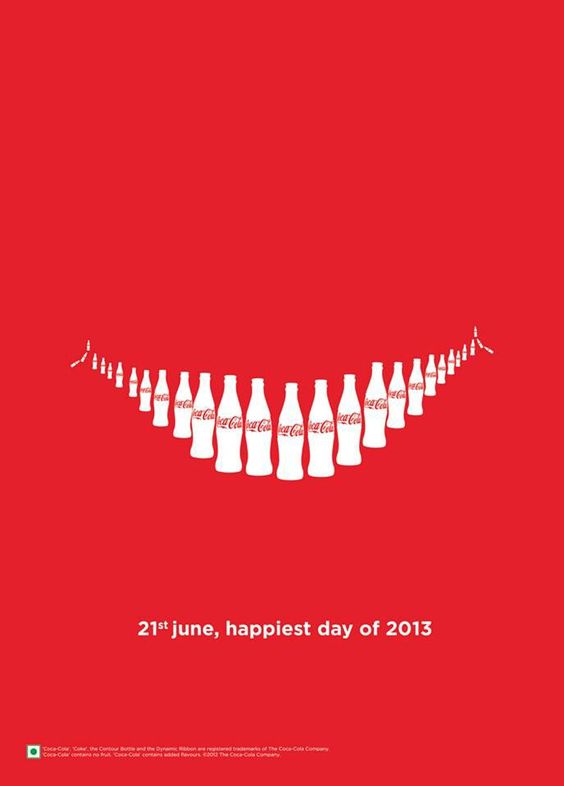
Image credits
4. Emphasis
Emphasis is all about highlighting the most of import area in your design. For instance, if you want to accentuate the headline in your visual, then make certain to use a font size that will stand out and will draw people's attention. Similarly, yous tin can utilize a bold colour to make the text pop.
If yous want to make a item element more prominent, you can use scale to brand it bigger or smaller than information technology is in real life.
Let's say that you want to use a bunny in your pattern. You can make it look humongous, or you tin can make its eyes await bigger and bolder.

Image credits
5. Movement
You've probably heard before someone explaining a piece of art as having a lot of movement . Even though a visual is static, information technology can even so give the feeling as if the design is actually moving.
For movement, you tin can employ shapes, lines, edges, or color, the purpose being to direct the man eye.
When designing something, you can have reward of sure elements to control how the man eye travels over a design.

Epitome credits
6. Unity
Unity is all about how the different elements of your blueprint come together and class a relationship. You've most likely seen before designs that give you the impression that the fonts and everything else were chosen at random, so there wasn't any sense of unity.
All the visual elements you use in your design should be connected to one some other. Also, unity is going to help you communicate your bulletin in a clear, organized, and concise manner.

seven. Rhythm
The same way spaces between musical notes create rhythm, spaces between design elements can give rhythm besides to a visual.
Visual rhythms can be regular, flowing, progressive, random, and alternate.
Regular rhythm is when the spacing betwixt elements is the aforementioned. The flowing rhythm gives a sense of movement through curves and bends. Progressive rhythm is all nearly irresolute and iterating with each step. The random rhythm doesn't accept any clear design. Alternating rhythm uses a set of patterns.
Concluding Thoughts
Graphic blueprint has its principles and rules that you lot generally need to follow to create stunning visuals. Yous can acquire some things by following these principles and using the elements I talked near, but in the finish, you'll also exercise a lot of learning on your own.
Trust your instinct, take every principle with a grain of salt, and feel costless to dismiss any dominion when you feel like information technology doesn't make sense to utilise information technology.
As a beginner, notwithstanding, these elements and principles of design will definitely come in handy and will help you develop a personal style.
If you have any other tips yous'd like to share, feel gratis to leave us a annotate.
0 Response to "The Role That the Principles of Design Play in Relationship to the Elements of Art"
Post a Comment